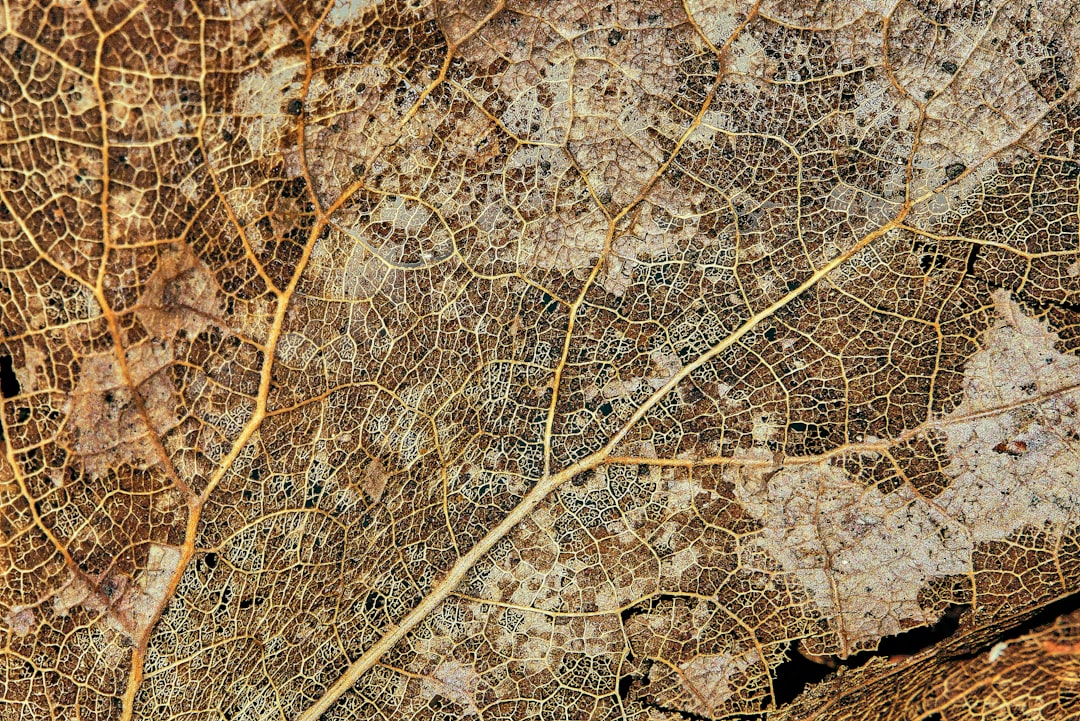

Czech forests have faced unprecedented challenges in recent years. Climate change, bark beetle infestations, and changing precipitation patterns have placed immense pressure on forest ecosystems that cover roughly one-third of the country's territory. In response, Czech researchers and forest management authorities have turned to artificial intelligence and remote sensing technologies to monitor forest health, detect threats early, and develop more resilient management strategies. This article explores how these technological approaches are transforming environmental monitoring in the Czech Republic.
The Crisis in Czech Forests
To understand the significance of AI and geodata applications in Czech forestry, it's important to recognize the scale of the environmental challenges. Since 2015, the Czech Republic has experienced one of Europe's most severe bark beetle outbreaks, primarily affecting spruce forests that were weakened by drought conditions associated with climate change.
According to the Czech Forest Management Institute (ÚHÚL), over 40 million cubic meters of timber have been damaged by bark beetle outbreaks between 2018 and 2025, creating an ecological and economic crisis that traditional monitoring methods struggled to address effectively. The speed of infestation spread and the vast areas affected made conventional ground surveys inadequate for timely intervention.

Remote Sensing: The Foundation of Forest Monitoring
Remote sensing technologies provide the essential data foundation for AI-powered forest monitoring in the Czech Republic. Several key platforms are being utilized:
Satellite Imagery
Czech researchers are leveraging multiple satellite sources to monitor forest conditions:
- Sentinel-2: Part of the European Space Agency's Copernicus program, Sentinel-2 provides multispectral imagery with a revisit time of 5 days and spatial resolution of 10-20 meters, allowing for regular monitoring of vegetation health across the entire country.
- Planet Labs: Commercial satellite constellations providing daily imagery at 3-5 meter resolution are used to supplement public data sources, particularly for monitoring rapidly changing conditions.
- Landsat: While offering lower temporal resolution, the historical Landsat archive enables long-term trend analysis dating back decades, providing context for current forest changes.
Airborne LiDAR
The Czech Office for Surveying, Mapping and Cadastre has conducted nationwide LiDAR surveys that provide detailed 3D structural information about forests. This data is particularly valuable for assessing forest biomass, canopy structure, and detecting subtle changes in tree health that might not be visible in optical imagery.
Drone Surveys
For high-priority areas requiring extremely detailed monitoring, researchers from the Czech University of Life Sciences and other institutions deploy drone-based multispectral and thermal sensors. These surveys can detect stress in individual trees before visible symptoms appear, allowing for highly targeted intervention.
"The combination of satellite monitoring with targeted drone surveys has transformed our ability to detect bark beetle infestations. We can now identify affected areas 2-3 weeks earlier than with traditional methods, which is critical for effective containment."
— Dr. Jan Vopravil, Research Lead, Forest Protection Service
AI Applications in Czech Forest Monitoring
Early Detection of Bark Beetle Infestation
Perhaps the most critical application of AI in Czech forestry is the early detection of bark beetle outbreaks. Researchers at the Global Change Research Institute of the Czech Academy of Sciences have developed deep learning models that can detect subtle spectral changes in vegetation that indicate early-stage infestation, often before visual symptoms are apparent.
The system analyzes multispectral satellite imagery to identify shifts in near-infrared and red-edge bands that correlate with tree stress. When combined with environmental parameters like temperature and precipitation, the AI can predict areas at high risk of infestation with remarkable accuracy. In validation studies, this approach detected infested stands an average of 18 days earlier than conventional surveying methods.
Forest Health Assessment
Beyond beetle detection, AI systems are being used to conduct comprehensive forest health assessments. The Czech Forest Management Institute has implemented a convolutional neural network that classifies forest stands into five health categories based on multispectral signatures and structural parameters derived from LiDAR data.
This system provides forest managers with regularly updated health maps that highlight areas requiring intervention. The approach is particularly valuable for monitoring the effectiveness of restoration efforts in previously damaged areas.
Tree Species Classification
Effective forest management requires accurate information about forest composition. Researchers at Mendel University in Brno have developed AI algorithms that can distinguish between different tree species with over 85% accuracy using a combination of hyperspectral imagery and LiDAR data.
This capability is essential for developing targeted management strategies that account for species-specific vulnerabilities to pests, diseases, and climate stressors. It's also valuable for monitoring the success of diversification efforts aimed at creating more resilient mixed forests.
Change Detection and Disturbance Mapping
AI systems excel at detecting changes over time, making them ideal for monitoring forest disturbances. The Czech Environmental Information Agency operates an automated change detection system that processes satellite imagery to identify:
- Clear-cutting and timber harvesting activities
- Storm damage and windthrow
- Progressive dieback from drought or disease
- Illegal logging and unauthorized clearing
By comparing current imagery with historical baselines, the system can distinguish between planned management activities and unexpected disturbances requiring investigation.

Carbon Stock Estimation
As carbon sequestration becomes increasingly important in climate change mitigation efforts, Czech researchers are using AI to estimate forest carbon stocks more accurately. A team from Charles University has developed machine learning models that combine satellite imagery with LiDAR-derived structural measurements and ground sampling data to estimate above-ground biomass and carbon content.
This approach provides more frequent and spatially comprehensive carbon stock assessments than traditional inventory methods, supporting both national carbon accounting and potential participation in carbon credit markets.
Practical Implementation and Results
The Šumava Monitoring System
One of the most comprehensive implementations of AI-powered forest monitoring is in Šumava National Park, which has been severely affected by bark beetle outbreaks. The park administration, in collaboration with the Czech Academy of Sciences, has implemented an integrated monitoring system that includes:
- Weekly analysis of Sentinel-2 imagery for early detection of tree stress
- Automated alerts when AI detects potential new infestation hotspots
- Deployment planning for ground teams based on risk prioritization
- Drone surveys of high-risk areas to confirm infestation and assess severity
Since implementation in 2020, this system has reduced response time to new infestations by 65% and improved the efficiency of management interventions by directing resources to the highest-priority areas.
Nationwide Forest Health Monitoring
Building on the success of regional implementations, the Czech Forest Management Institute has expanded AI-based monitoring to cover all forested areas in the country. Their platform provides forest managers and policymakers with:
- Monthly forest health status maps at 10-meter resolution
- Early warning alerts for areas showing signs of decline
- Seasonal and annual change assessments
- Forecasts of forest vulnerability based on environmental conditions
This system has become an essential tool for national forest policy, informing decisions about forest management practices, species selection for reforestation, and resource allocation for forest protection.
Challenges and Limitations
Despite impressive advances, AI-powered forest monitoring in the Czech Republic still faces several significant challenges:
- Cloud Cover: The Czech climate includes significant periods of cloud cover that can interrupt regular satellite monitoring, creating gaps in the data timeline. While AI algorithms can compensate somewhat for missing data, persistent cloudiness remains problematic.
- Ground Truth Data: Developing accurate AI models requires extensive ground truth data for training and validation. Collecting this data in diverse forest conditions is labor-intensive and expensive.
- Complex Forest Structures: Mixed-species forests with multiple canopy layers present challenges for remote sensing analysis, as understory conditions may be obscured.
- Integration with Management Systems: Translating technical monitoring outputs into actionable information for forest managers with varying levels of technical expertise remains challenging.
Researchers are addressing these limitations through approaches like data fusion (combining multiple sensor types), semi-supervised learning techniques that require less ground truth data, and development of user-friendly interfaces for forest managers.
Future Directions
Looking ahead, several emerging trends are likely to shape the continued evolution of AI and remote sensing applications in Czech forest monitoring:
Integration of Environmental Sensor Networks
The Czech Hydrometeorological Institute is expanding its network of environmental sensors in forested areas, collecting data on temperature, humidity, soil moisture, and other parameters. Integrating this ground-based data with remote sensing observations will provide more context for AI analysis and improve predictive capabilities.
Hyperspectral Satellite Data
The planned launch of new hyperspectral satellite missions will provide much more detailed spectral information than current multispectral sensors, enabling detection of subtle biochemical changes in vegetation that indicate stress well before visible symptoms appear.
Predictive Modeling
Czech researchers are moving beyond monitoring current conditions to developing predictive models that forecast forest vulnerabilities based on climate projections. These models aim to identify areas that may become unsuitable for current tree species in the coming decades, informing long-term forest adaptation strategies.
Citizen Science Integration
Several initiatives are exploring how to integrate observations from citizens and forest visitors with professional monitoring systems. AI can help validate and incorporate these observations, expanding monitoring coverage and engaging the public in forest protection.
Conclusion
The application of AI and remote sensing technologies to forest monitoring in the Czech Republic represents a significant step forward in environmental management. These approaches provide unprecedented insights into forest health and dynamics, enabling more proactive and targeted interventions to address threats like bark beetle infestations, climate stress, and other disturbances.
As these systems continue to evolve and become more integrated with management practices, they offer hope for more resilient and sustainable Czech forests in the face of growing environmental challenges. The lessons learned and techniques developed in the Czech Republic also provide valuable models that can be adapted for forest monitoring and management in other regions facing similar challenges.
By combining the analytical power of artificial intelligence with the comprehensive perspective of remote sensing, Czech forest managers are gaining the tools they need to protect and restore one of the country's most valuable natural resources for future generations.